
Milos Travel Guide
Complete Milos travel guide with best beaches like Sarakiniko, boat tours to Kleftiko, where to stay, how to get there, local food tips, and a smart 3 to 5 day itinerary.
Ultimate Guide to Visiting Milos
Milos stands out in the Cyclades for its volcanic coastline, pale rock formations, and water that shifts from deep blue to bright turquoise within a few meters. It feels noticeably calmer than Santorini or Mykonos, especially outside August, and that balance between wild scenery and quiet villages is what makes it addictive. If you’re planning to Travel to Greece and want an island that combines dramatic landscapes with authentic village life, Milos is one of the strongest choices in the Aegean. If you pay attention to the wind direction and chase the light in the late afternoon, the island shows a completely different personality.
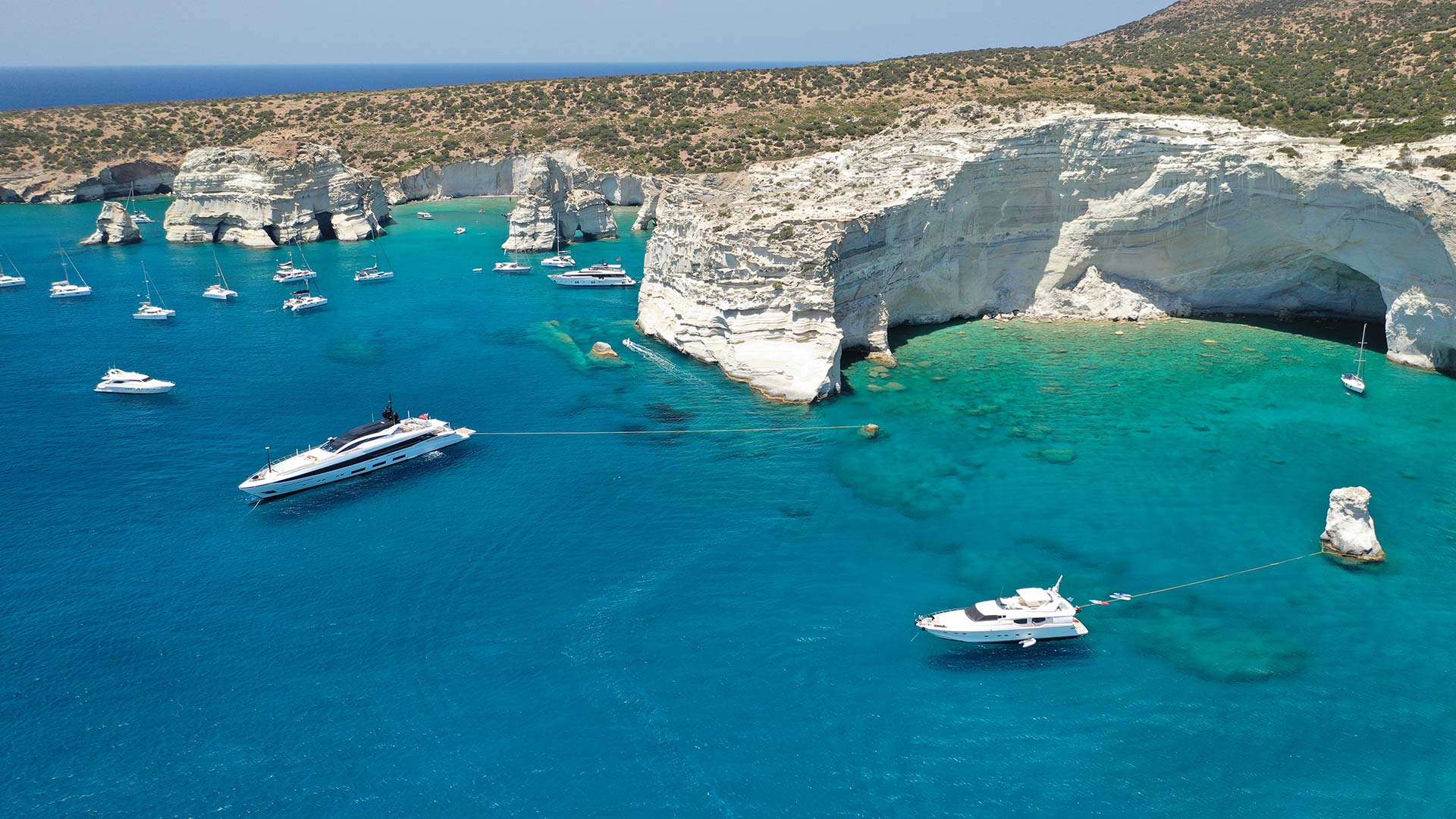
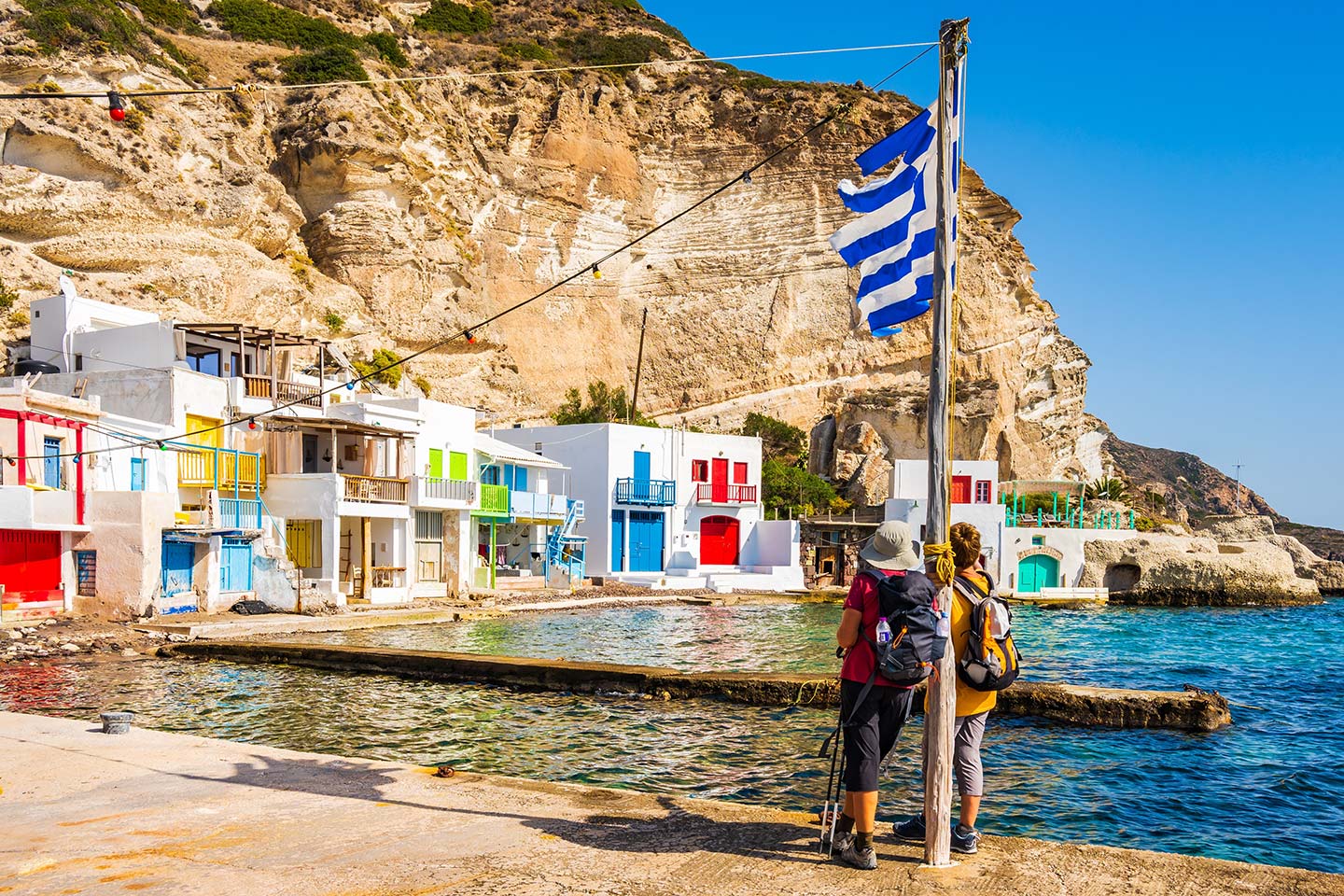
Plaka is the best place for classic Milos sunset viewpoints, with narrow whitewashed lanes leading up toward the Kastro. From there, head down to the fishing villages of Klima and Mandrakia, where the colorful syrmata boat garages sit directly on the water and tavernas feel genuinely local. Exploring Sarakiniko Beach in Milos feels almost surreal, with smooth white volcanic rock dropping into clear blue water. If you prefer sand, Firiplaka and Tsigrado offer softer ground and bright turquoise bays, each with a completely different atmosphere. Because many coves are best reached by sea, a boat tour to Kleftiko’s sea caves is often the highlight.
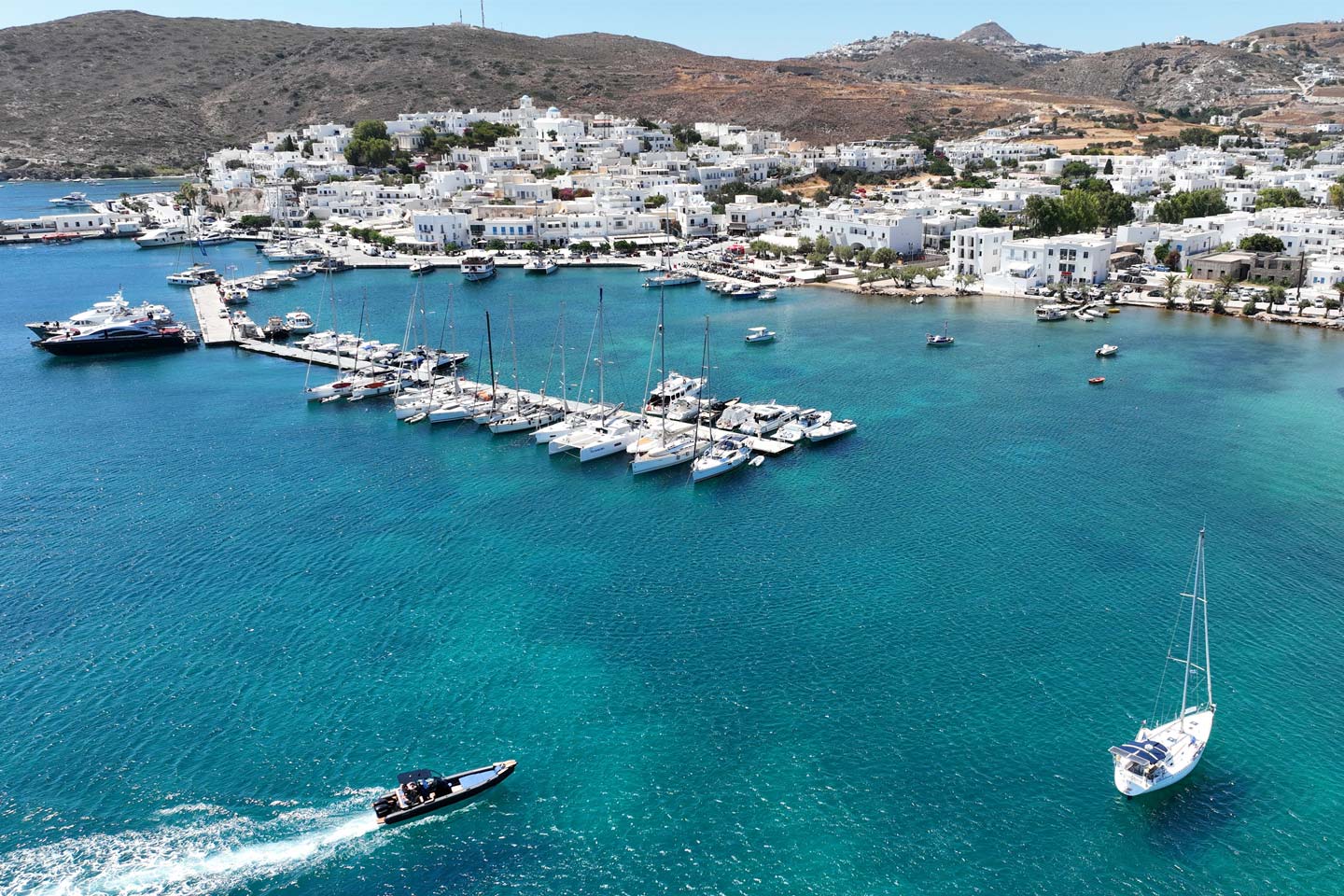
If you want convenience, stay near Adamas for easy ferry access and bus links. Pollonia feels softer and slower, especially in the evenings when the harbor quiets down. A rental car or ATV gives you freedom, but buses do connect the main stops in summer. I found Sarakiniko far better before 10 am; by afternoon the light flattens the rocks and the parking fills quickly. When the meltemi blows, the south-coast beaches are usually calmer.
How to Get to Milos
You can reach Milos either by ferry or a short domestic flight. Most visitors travel from Athens, departing from Piraeus by ferry or flying directly to Milos Airport. In summer, additional connections link through nearby Cycladic islands. Schedules shift depending on the season and wind conditions, so don’t rely on old screenshots or last year’s timetable. Check departures close to your travel date, especially if strong winds are forecast.
Most ferries to Milos depart from Piraeus in Athens. High-speed vessels shorten the journey but cost more, while conventional ferries move slower and tend to feel steadier when the sea is rough. In July and August, tickets often sell out several days in advance, especially for weekend departures. If you’re traveling from Athens, earlier sailings usually make island connections smoother and give you more daylight on arrival.
You can also fly to Milos from Athens, landing at Milos Airport near Adamas. Flights are quick and convenient if you’re short on time, though baggage limits can be stricter than on ferries. Once you arrive, taxis and buses connect the port and airport with Plaka, Pollonia, and popular beaches.
When to Visit Milos for the Best Experience
Milos is rewarding most of the year, but timing makes a real difference for beaches, boat trips, and village life. For many travelers, late spring (May to mid-June) is the sweet spot: warm days, clear water starting to shine, and fewer crowds on Sarakiniko and Firiplaka. Room rates and ferry tickets are noticeably lower before peak season, and you’ll have more choice instead of picking from what’s left. In late May and early June, I’ve found it much easier to book a good room in Plaka without paying August prices.
High summer (late June to August) brings the liveliest atmosphere in Adamas and Plaka, plus the widest choice of tours to Kleftiko and Polyaigos. However, expect heat, busier restaurants, and limited availability—book early if you want a specific hotel or sunset boat cruise. August is the most crowded month, particularly around the mid-August Greek holiday. Expect packed parking at Sarakiniko, fully booked boat tours, and restaurants in Plaka running waiting lists after sunset.
For a calmer Milos with excellent swimming, September is hard to beat: sea temperatures stay high, meltemi winds often ease, and evenings are pleasant for strolls in Trypiti. October can still work for a quieter Cyclades escape, although boat schedules and beach services begin to scale back.
Top Things to Do in Milos
Milos is a volcanic island with dramatic coastlines, calm coves, and villages that glow at sunset.
A boat trip along the west and south shores gives access to coastline that roads simply don’t reach, including the sea caves of Kleftiko and the striking rock formations near Sykia. Seeing this side of Milos from the water explains why boat tours are central to most itineraries.
When the sea goes flat in the afternoon, the water around Kleftiko turns almost transparent, and you can see straight down to the rock formations below. The contrast between the white cliffs and deep blue openings makes this stretch of coastline one of the most striking parts of Milos.
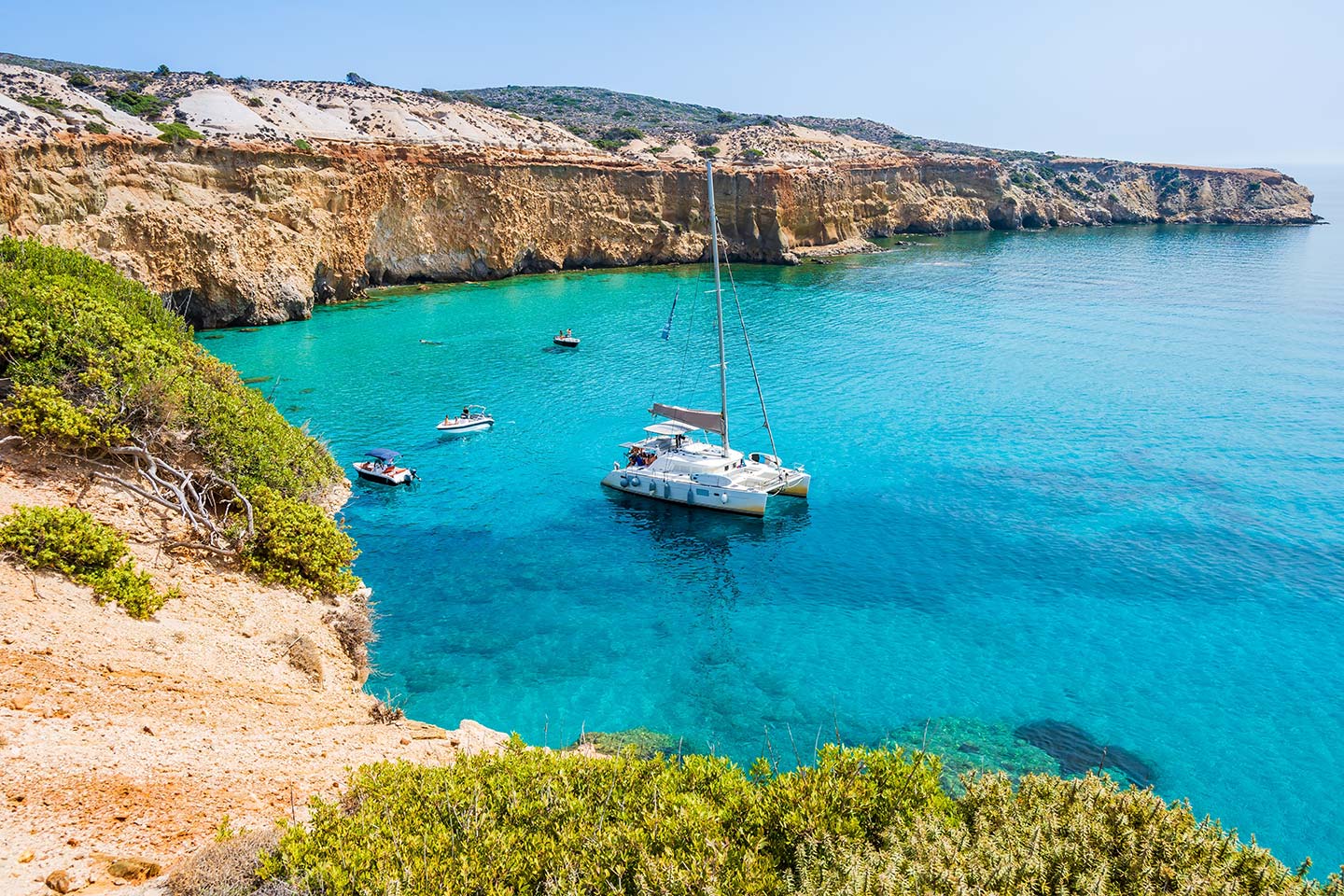
The best beaches in Milos each have a distinct personality. Sarakiniko draws visitors for its white volcanic curves and early-morning light, while Firiplaka and Tsigrado offer softer sand and bright, shallow water. For something less crowded, Papafragas sits tucked between narrow cliffs, and Paliochori stands out for its colorful seabed and pockets of naturally warm sand.
Visiting Plaka village in Milos means slow walks through narrow lanes and a climb toward the Kastro for sunset views over the bay. Nearby, discovering the Catacombs of Milos and the Ancient Theatre in Trypiti adds historical depth to the landscape. In Klima, the painted syrmata boat houses sit directly at the water’s edge, and a simple plate of seafood with ladenia in a small taverna feels far more authentic than any formal restaurant setting.
Exploring the Best Beaches in Milos
Milos is famous for beaches shaped by volcanic rock, where bright water meets dramatic cliffs and unusual colors. If you’re planning a beach-focused trip, it helps to know which spots match your style, since some are easy to reach while others feel more remote. Either way, the island’s coastline rewards a little curiosity.
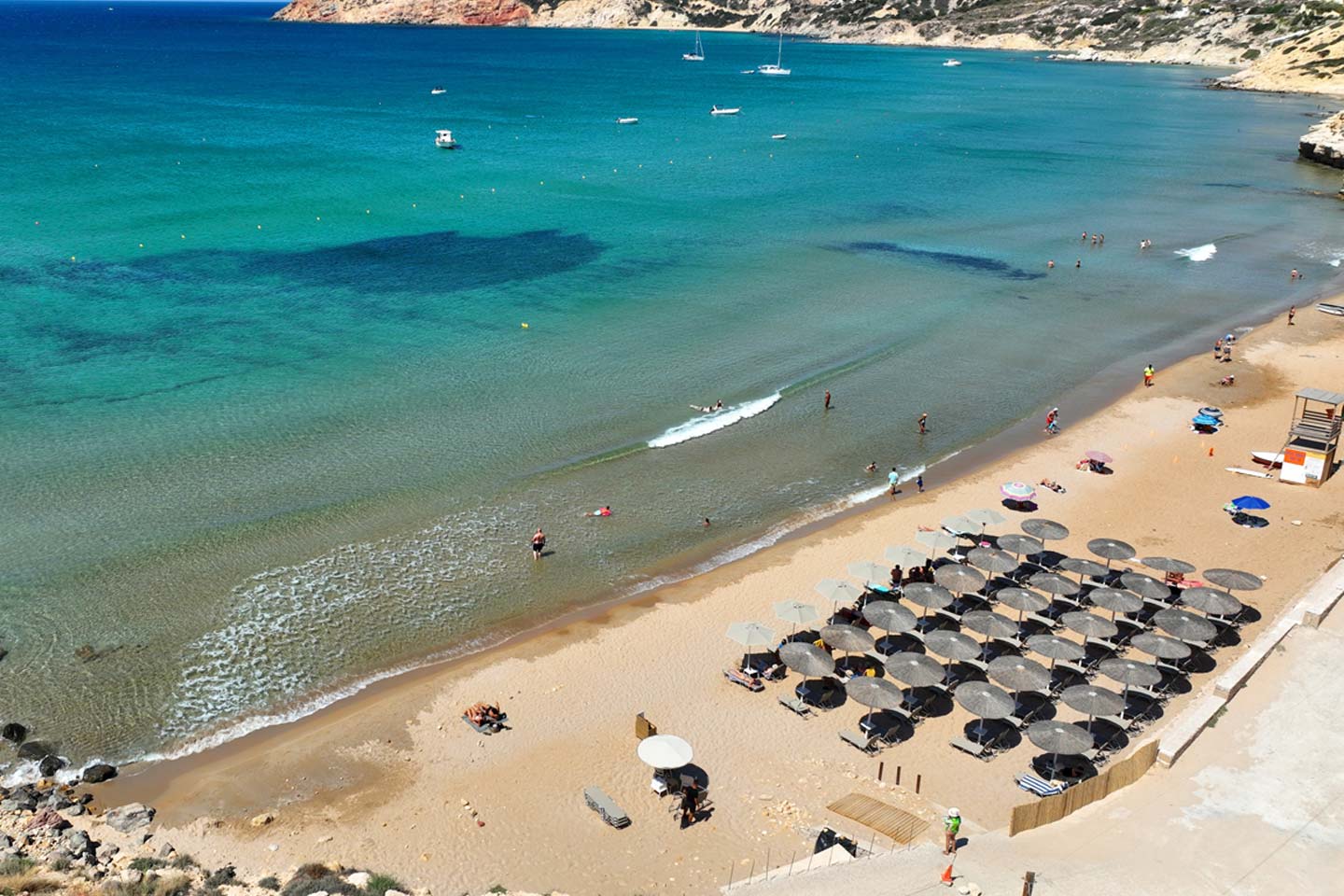
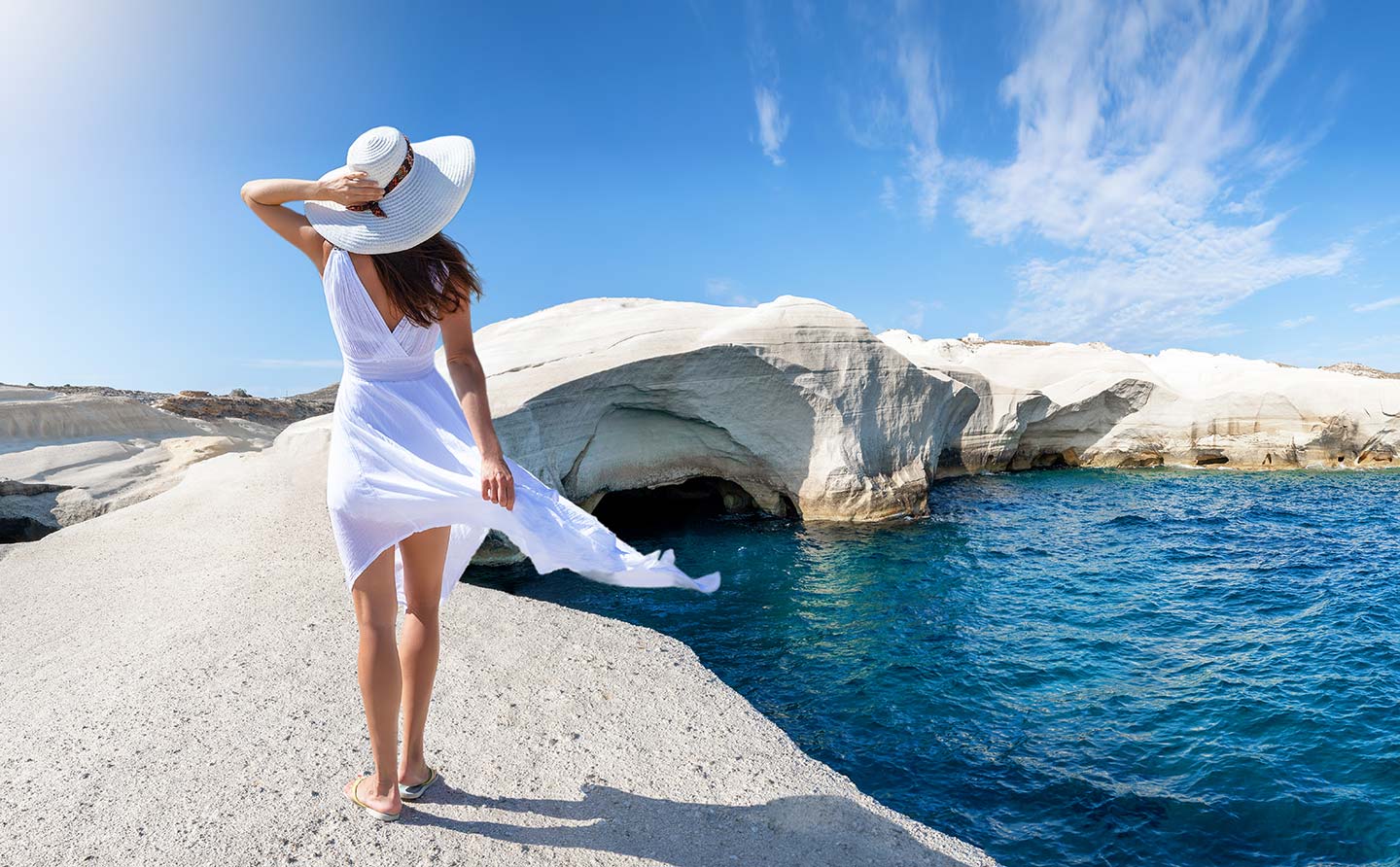
Sarakiniko stands out for its moonlike white rocks and calm, clear shallows, especially beautiful in the early morning. Nearby, Firopotamos combines a small cove with charming boat houses, making it great for a relaxed swim. For soft sand and beach facilities, Firiplaka is a popular choice, and a short walk leads to Tsigrado, a smaller bay reached via a rope-and-ladder section that adds a bit of adventure.
Beyond the main beaches, Kleftiko remains one of the island’s defining natural landmarks, accessible primarily by boat for sea caves and snorkeling. Paliochori offers a different atmosphere, with multicolored pebbles and volcanic sand that stays noticeably warm underfoot.
A boat tour that circles Kleftiko and continues toward hidden coves often ends up being the most memorable day on the island. It also solves the wind problem, since you can adjust your swimming stops depending on which side of Milos is calmer.
Must See Attractions in Milos
Milos is famous for volcanic landscapes, sea-carved coves, and villages that glow at sunset. Start with Sarakiniko, the island’s most photographed spot, where smooth white rock forms a lunar shoreline above clear water. Go early for softer light and fewer footprints, then linger for a swim if the sea is calm.
Next, head to the colorful fishing settlement of Klima, lined with syrmata boat houses painted in bright doors and shutters. Nearby, Plaka is the hilltop capital with winding lanes, small churches, and viewpoints over the bay; sunset from the Kastro area is a classic Milos moment. Within a short drive, the landscape changes dramatically — one moment you’re above sharp volcanic cliffs, the next you’re stepping onto soft sand with shallow turquoise water. That contrast is part of what makes sightseeing in Milos feel dynamic rather than repetitive.
For variety, add a few highlights that show Milos at its best: – Kleftiko by boat for dramatic arches and turquoise caves.
- Papafragas for narrow sea inlets framed by rock.
- Ancient Theatre and the Catacombs for a look at the island’s past.
Many travelers report that a boat day ties everything together, especially when the wind changes which beaches are easiest to reach.
Milos Accommodation Options
Milos offers a wide mix of places to stay, from simple rooms near the port to stylish suites overlooking the Aegean. Most visitors base themselves in Adamas for ferry access and evening strolls, while Plaka feels quieter and sits closer to sunsets and hilltop views. If beach time is the priority, consider spots near Pollonia or the south-coast coves, where mornings start with a short walk to the water.
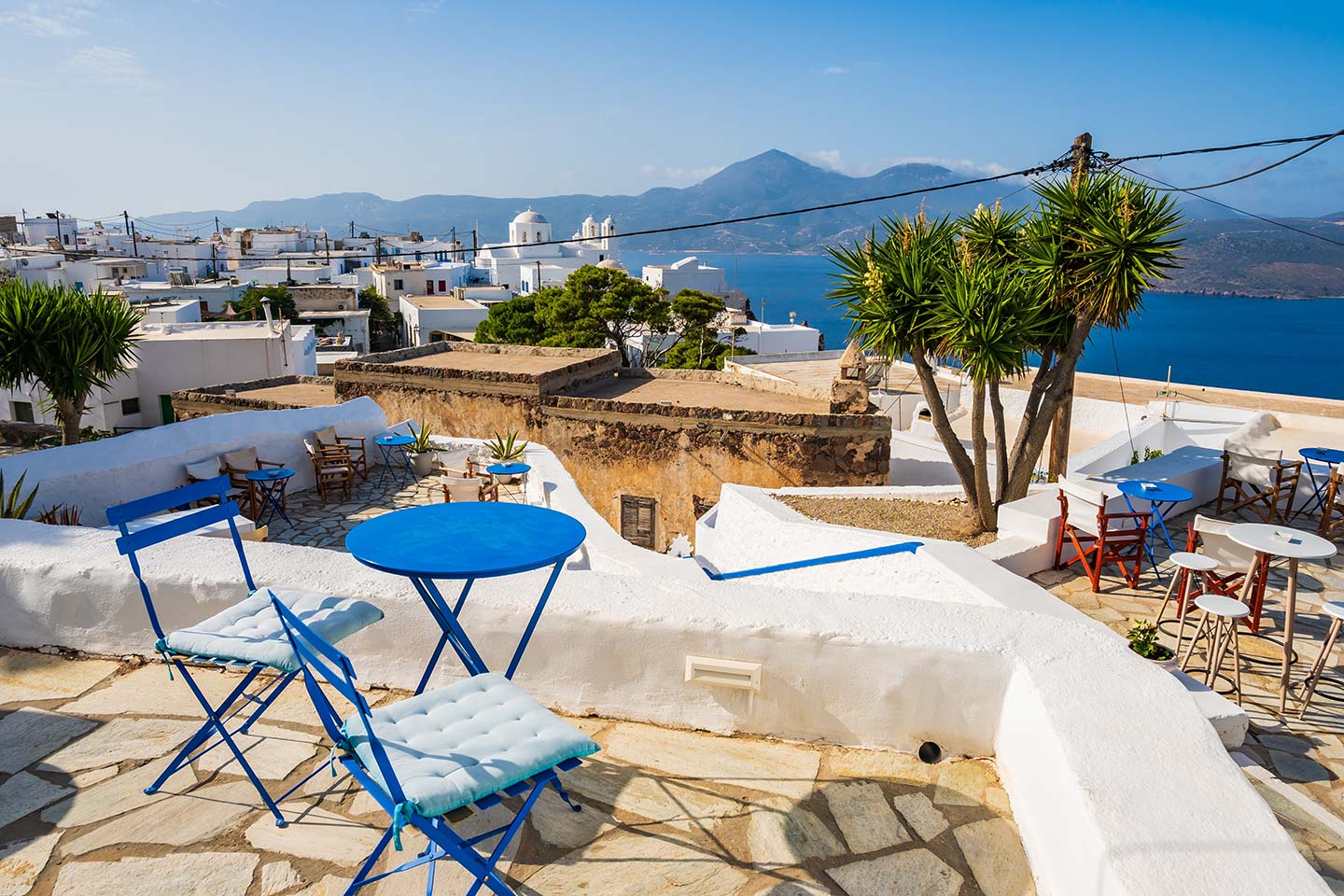
Milos accommodation options range from boutique hotels and design-led suites to family-run studios with kitchenettes. Larger villas suit groups looking for privacy, while small guesthouses near the port offer more affordable stays without sacrificing location.
When choosing, think about transport. Milos is easiest with a rental car or scooter, yet staying central can reduce driving, especially in high season. July and August accommodation fills quickly, especially in Pollonia and Plaka, so waiting too long can limit your options to the most expensive rooms. In May, June, and September, you’ll usually find better value and a wider selection without sacrificing weather.
Finally, check whether breakfast, parking, and sea-view balconies matter to you, as these details can differ greatly even within the same village.
Getting Around Milos Transportation Guide
Milos is easy to explore with a mix of buses, taxis, and rentals, but distances and winding roads mean planning helps. In summer, the island gets busy around Adamas (Adamantas), Plaka, Pollonia, and popular beaches, so it’s wise to decide early whether you’ll rely on public transport or hire your own wheels.
The Milos bus network connects key villages and several beaches, with Adamas often acting as the main hub. Schedules can change by season, so check times locally and leave some buffer for return trips, especially after sunset. In July and August, taxis can be hard to find after sunset, particularly around Adamas and Plaka. If you’re relying on one for dinner or a late return from the beach, call earlier than you think you need to.
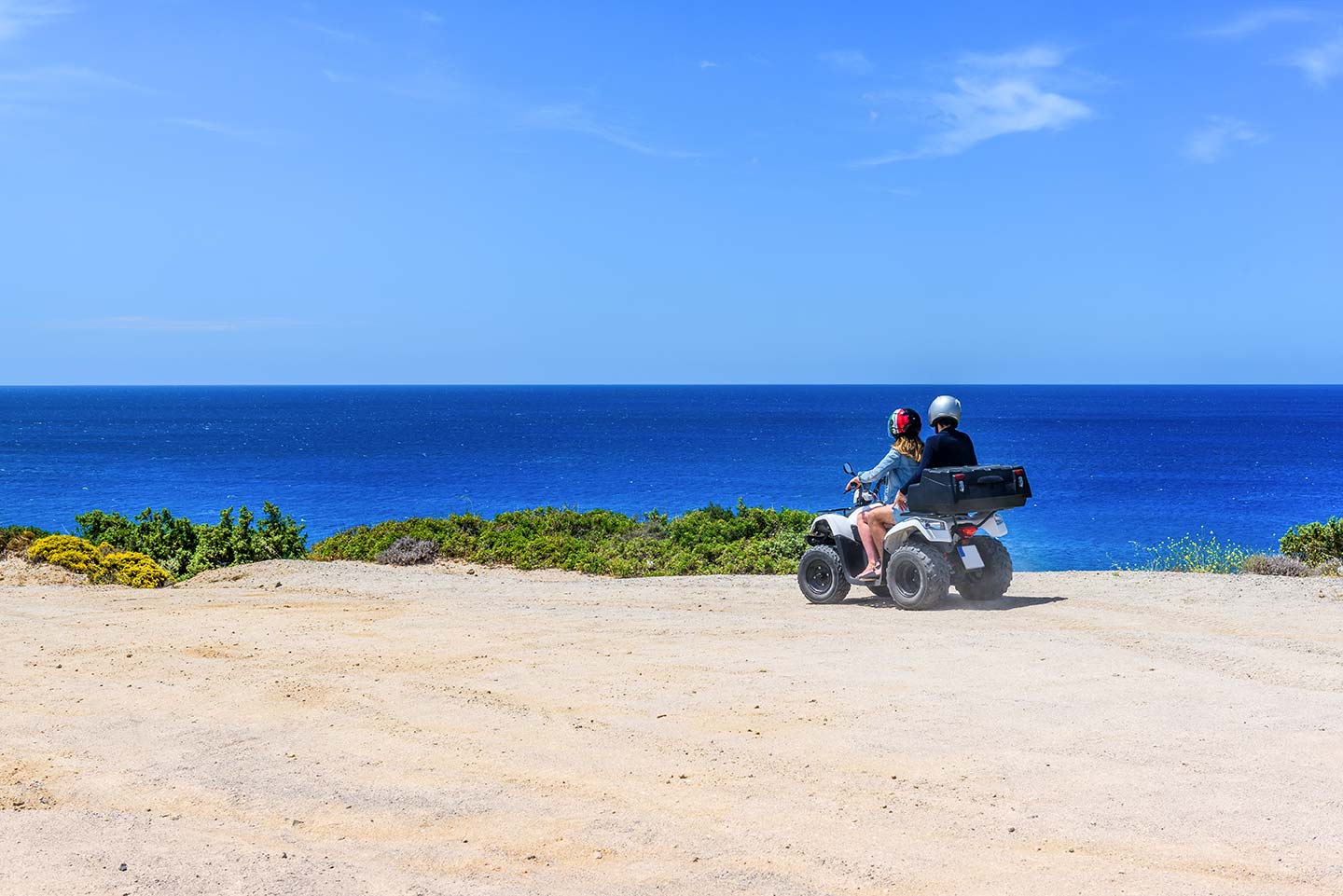
For more freedom, consider a scooter, ATV, or car rental. A small car is comfortable for longer days and cooler evenings, while scooters suit confident riders on narrow roads. Keep in mind that some beach tracks are rough, so ask before driving to remote spots. Handy basics: – Carry cash for smaller fares and parking – Bring a valid license and check insurance details
Where to Eat in Milos Best Restaurants
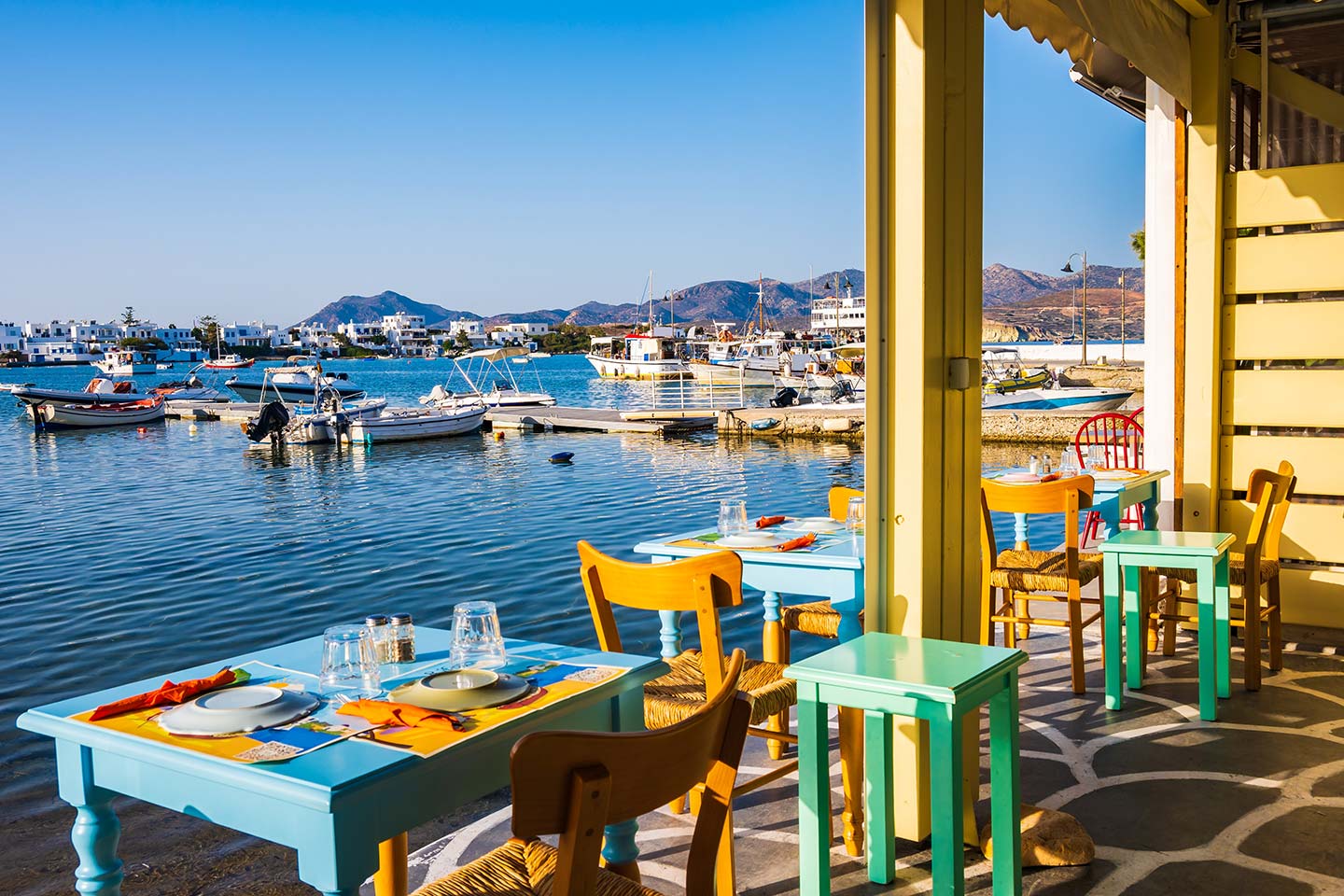
Milos is small, but its food scene is memorable, especially if you focus on local products and simple Cycladic cooking. Some of the milos best restaurants sit in Plaka, where sunset views pair naturally with grilled octopus, chickpea fritters, and slow-cooked lamb. In Pollonia, waterfront tavernas focus on the day’s catch, and it’s easy for a relaxed lunch to stretch well into the evening.
For something distinctly Milos, look for places that serve pitarakia (little cheese pies), karpouzopita (watermelon pie), and dishes using xinomyzithra and local capers. Adamas is a practical base with plenty of choices, from casual souvlaki to smarter small-plate spots, so it’s ideal on arrival or before a ferry.
A few reliable picks by area
- Plaka Try a traditional taverna for home-style Cycladic plates
- Pollonia Choose a fish taverna for fresh seafood by the sea
- Adamas Mix of casual and modern restaurants, good for groups
Outdoor Activities and Adventures in Milos
Milos pairs wild volcanic scenery with clear, calm water, so outdoor plans come together easily. Start with coastal walks above Sarakiniko’s moonlike rocks or along the cliffs near Plaka for big Aegean views. Then, when the light softens, head down to Mandrakia or Klima to watch fishing boats come in and the sea turn silver.
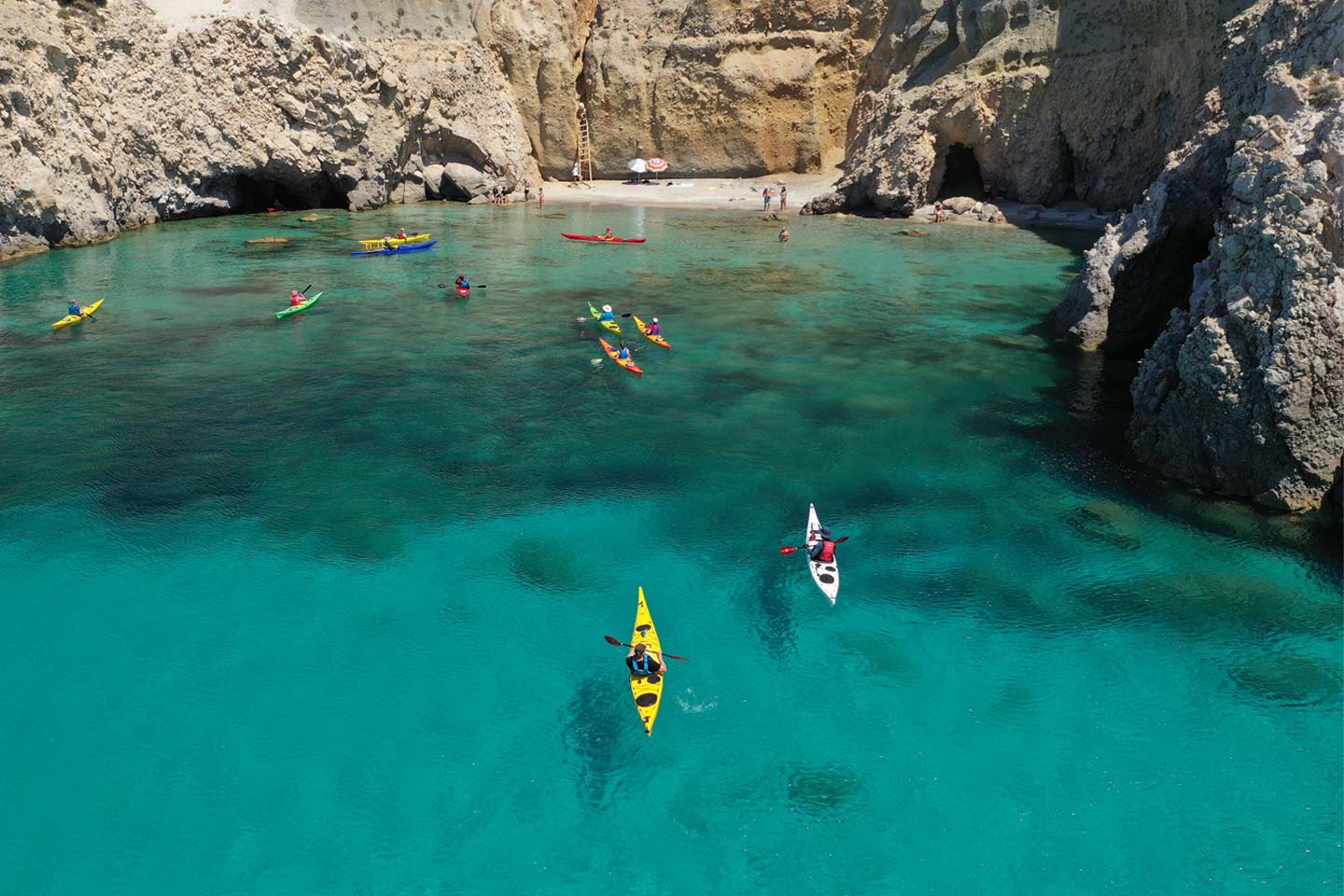
On the water, kayaking and stand-up paddleboarding are great around sheltered bays, while boat trips reveal beaches you can’t reach by road, including Kleftiko’s sea caves. Morning boat departures are usually calmer, and the coves feel quieter before the afternoon breeze builds. If you prefer smoother water and fewer boats around Kleftiko, choose the earliest slot available. Snorkeling is strong almost everywhere, especially where the rocks drop into deep turquoise.
If you prefer land adventures, try a scenic ride to the old sulfur mines and the lunar landscape near Firiplaka, or follow signed trails between villages for a dose of history. A few easy ideas: – Coastal hike near Plaka and Trypiti – Kayak to sea caves and hidden coves – Snorkel from Papafragas or around Pollonia
Cultural Experiences and Local Life in Milos
Milos is often introduced through its beaches, yet village life adds the depth many travelers look for. In Plaka, the island’s hilltop capital, whitewashed lanes lead to small museums and family-run tavernas where the day’s pace feels unhurried. Nearby, Trypiti is known for its windmills and catacombs, while Adamas, the port town, shows a more contemporary rhythm with cafés, fishermen, and evening strolls along the waterfront.
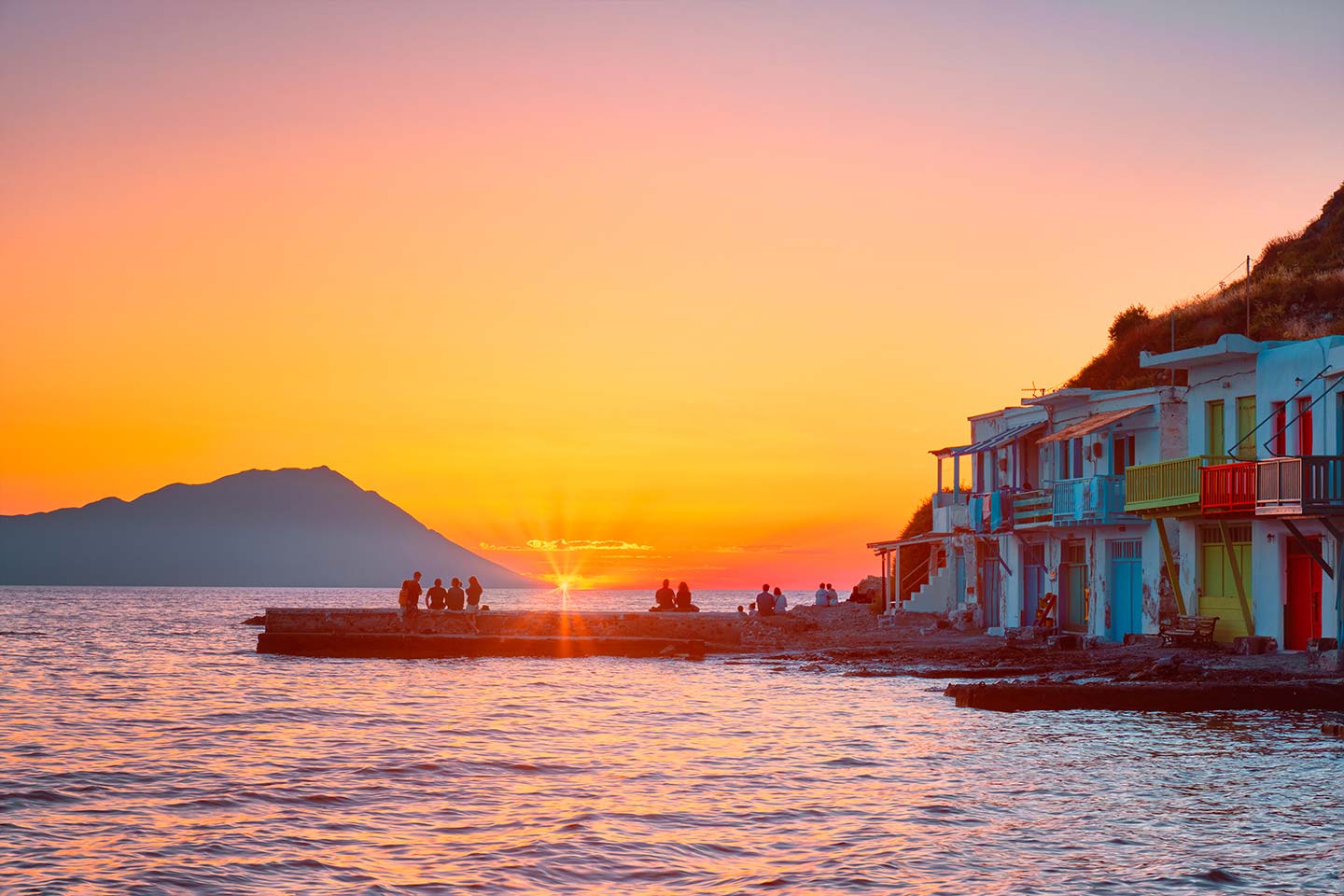
For a closer look at local culture, visit the fishing villages of Klima, Firopotamos, and Mandrakia. Their colorful boathouses sit at the water’s edge, and early mornings are best for watching boats come in and nets being sorted.
A quiet sunset walk through Klima or Mandrakia can feel just as powerful as a boat day. When the light hits the painted doors and the water turns copper, the villages slow down in a way that feels genuinely local rather than staged.
Food is one of the easiest ways into Milos traditions. Look for: – Pitarakia (small cheese pies) – Ladenia (tomato-onion flatbread) – Local capers and honey
Finally, keep an eye on summer panigyria in village squares, where music, dancing, and communal tables bring everyone together, including visitors who arrive with respect and curiosity.
Sample Milos Itinerary Suggestions
Milos is compact enough for a relaxed island break, yet varied enough to reward a plan. Start by choosing a base like Adamas for easy ferry access and dining, or Pollonia for a quieter seaside feel. Then, build your days around beaches, boat time, and a couple of villages at golden hour.
Milos works better when you avoid over-scheduling. Some of the best moments happen when you stay longer at a beach that feels right or pull over at a viewpoint you hadn’t planned to visit.
Best 3-Day Milos Itinerary
- Day 1: Explore Plaka and the sunset at Plathiena or nearby viewpoints, then dinner in Tripiti.
- Day 2: Take a Milos boat tour to Kleftiko and the sea caves, with swimming stops.
- Day 3: Beach-hop Sarakiniko early, then Firiplaka and Tsigrado (if conditions allow), finishing in Pollonia.
If you have 4–5 days
Add a slower beach day and a culture break. The Catacombs of Milos and the Ancient Theatre near Klima pair well with an evening stroll among the colorful syrmata.
Before planning your beach day, check the meltemi wind forecast. A strong north wind usually pushes swimmers toward the south coast, while calmer days open up Sarakiniko and the northern coves.
Travel Tips for Your Milos Visit
Milos looks effortless on photos, but small decisions make a big difference once you’re there. Choosing the right beach for the wind and booking transport early can save you a lot of frustration.
If you’re visiting in July or August, book accommodation and rental vehicles early, especially if you want to stay near Adamas or Pollonia. Spring and early autumn are calmer and still great for swimming. Also, bring reef shoes for pebbly coves and boat stops, and pack a light jacket for breezy evenings.
Getting around Milos is simplest with a scooter, ATV, or small car, since buses are limited outside peak hours. Roads to some beaches are rough, so drive slowly and check your insurance terms. For the island’s showstoppers like Kleftiko and Sykia, a boat tour is worth prioritizing; many travelers report that morning departures have calmer seas.
A few practical essentials – Carry cash for small tavernas and beach canteens – Start beach days early for parking at Sarakiniko and Firiplaka – Respect signs at mining areas and unstable cliffs, especially after rain
Meals in Milos follow the Greek rhythm. Lunch stretches into the afternoon, and dinner rarely starts before 9 pm. If you’re moving between beaches and villages, carry something small with you so you’re not waiting hungry for the kitchen to open.
Frequently Asked Questions About Milos
Milos is a Cyclades island known for volcanic landscapes, bright fishing villages, and standout beaches. Compared to Santorini or Mykonos, Milos moves at a slower pace, especially outside August. You still get strong food options and boat access to dramatic coastlines, but without the same density of cruise traffic and nightlife crowds. Because distances are short, you can mix beach time with small-town strolls and sunset viewpoints in the same day.
When is the best time to visit Milos?
Late May to June and September are popular for warm weather with fewer crowds. July and August bring the liveliest atmosphere and the highest prices, plus stronger meltemi winds on some coasts.
How many days do you need?
A long weekend works, but 4–5 days lets you add a boat tour and explore inland villages without rushing.
How do you get around?
Renting a car or scooter is the simplest option, though buses cover key routes in summer. Don’t miss: – A boat trip to Kleftiko and sea caves – Sarakiniko’s lunar-white rocks – Plaka and the colorful syrmata at Klima
Where to stay in Milos?
Adamas is convenient for the port, Pollonia suits a quieter base, and Plaka offers classic Cyclades charm and sunsets.